Women in New Manufacturing Innovation Spotlight: Telle Whitney
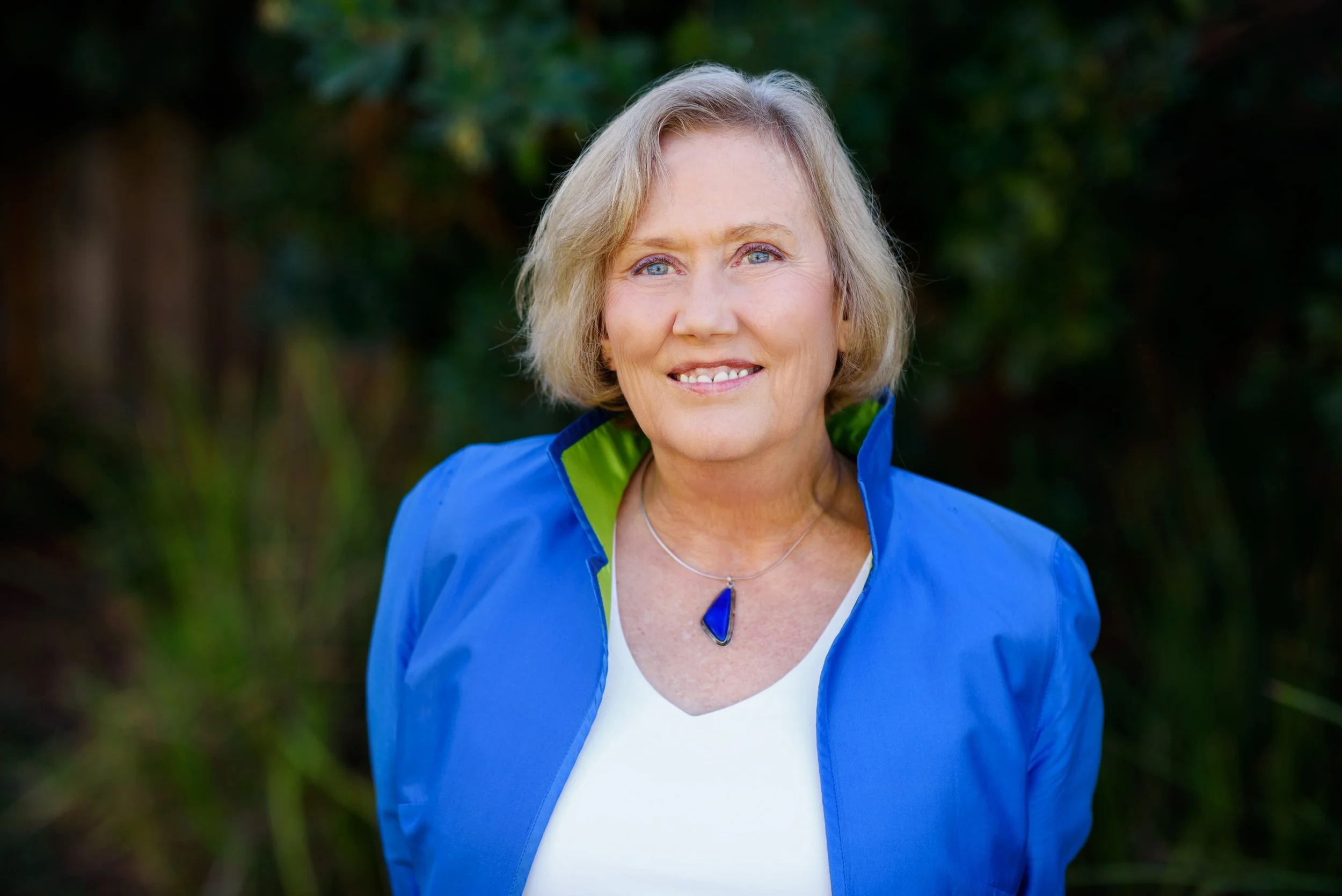
Telle Whitney is a recognized technologist and a preeminent advocate for women in technology, bringing over 30 years of leadership experience, including two decades in Silicon Valley’s semiconductor industry. She held senior technical management positions at Actel and PMC-Sierra, as well as senior roles at several startup technology companies. She is best known for her 15-year tenure as the CEO of the Anita Borg Institute, a global non-profit organization dedicated to increasing the representation of women technologists and connecting them with leading enterprises.She also co-founded the Grace Hopper Celebration of Women in Computing, which has since grown into the world’s largest annual gathering of women in tech, designed to bring their research and career interests to the forefront.
A champion for inclusive innovation, Whitney authored a book called “Rebooting Tech Culture”, a guide exploring the practices executives use to build environments where everyone can thrive. Today, she continues to shape the future of the industry by consulting for tech organizations and serving on several boards, including AI4All and the Center for Minorities and People with Disabilities in Information Technology (CMD-IT). In recognition of her impact, she was named one of Fast Company’s "Most Influential Women in Technology" in 2011 and was elected to the prestigious National Academy of Engineering in 2022.
Whitney holds a Ph.D. and M.S. in Computer Science from the California Institute of Technology and a bachelor’s degree in Computer Science from the University of Utah.
1. You spent the first two decades of your career in Silicon Valley doing structured silicon design before eventually leading the Anita Borg Institute. How did your foundational training as a semiconductor engineer shape the way you approached solving complex, systemic 'human' problems, like gender diversity and organizational culture?
My foundational training was in structured silicon design—a method I focused on during my thesis at Caltech. At the time, it represented a shift in thinking: instead of treating a chip as one giant puzzle, we embraced a framework of repeatable, verified blocks that could be simulated and connected to form massive, complex systems. It’s the precursor to the modular logic that powers the giants of industry today, like Nvidia and AMD.
I carry that 'architectural' mindset into every systemic human problem I tackle. When you look at gender diversity or organizational culture, you aren't looking at a single new hire at an organization, or one person on a team, you are looking at a systems problem. In engineering, if you want a reliable chip, you don't just hope the electrons flow correctly—you design communication buses and strict methodologies to ensure they do. In an organization, culture is the architecture. It is the framework that dictates how information flows and who has the skills to succeed.
Complex human systems, much like high-performance silicon, require a framework that allows every individual component to thrive. If the architecture is sound, the entire system scales.
2. During your 15-year tenure as CEO of the Anita Borg Institute, you championed the concept of driving actual business value through gender diversity, growing the organization’s revenue from $1M to over $22M. What were some of the most common push backs you’ve faced when convincing others that diversity is a fundamental driver of innovation and profitability, and how did you overcome them?
One of the most persistent misunderstandings about non-profits is the idea that they sit outside the rules of business. During my 15 years at the Anita Borg Institute, I viewed growth not as a goal in itself, but as the primary engine for scaling impact. We didn't grow from $1M to $22M by asking for favors; we grew by treating our mission as a business imperative.
The most common pushback I faced was the 'charity trap'—the idea that diversity is a 'nice-to-have' social initiative or a compliance box to check, rather than a driver of the bottom line. To overcome this, I pivoted the conversation toward self-interest. I realized that while mission-driven passion is essential, it isn't what scales an organization. To get a CEO to invest deeply, they must believe they are receiving equal or greater value in return. We moved away from 'philanthropy' and toward strategic partnership, focusing on three key pillars to overcome resistance.
First, I often saw non-profit leaders limit their impact because they were afraid to run their organizations like a business. When I mentor non-profit leaders, we often discuss that a healthy P&L (Profit and Loss) is what allows you to build the infrastructure required for global change. Second, while there is a mountain of data correlating diversity with profitability and innovation, data alone rarely changes a skeptic's mind. The real breakthrough comes when you move a leader from 'looking at the numbers' to 'owning the outcome.' We overcame pushback by showing leaders that diversity isn't an HR initiative—it’s a product and innovation strategy. Finally, the most significant pushback often came from leaders who saw diversity as a distraction from 'real' technical work. I overcame this by identifying and empowering the 'engaged executive.' The greatest successes I’ve seen in both innovation and inclusion occur when leadership moves past the data and develops an inherent belief that a diverse team is a higher-performing team.
In the end, you don't convince people with a handout; you convince them by building a framework where their success is inextricably linked to the success of your mission.
3. In your recent book, Rebooting Tech Culture, you reflect on your decades of championing gender diversity and transforming the Anita Borg Institute. Based on the core insights you share in the book, what is the most critical piece of advice you have for young women today who are preparing to step into leadership roles in traditionally male-dominated fields like hardware, AI, and new manufacturing?
The most critical piece of advice I can offer is this: Find the courage to take risks when your next big opportunity crosses your path.
When the chance to lead the Anita Borg Institute first arose, it felt like a radical—and terrifying—departure from my path as a semiconductor executive. I spent weeks talking myself out of the role, checking my skills against an invisible list, and coming up short. I only stepped forward when I realized that my desire to make a difference was more important than my fear of being 'unready. I still see too many brilliant young women pass on leadership roles because they don't check every box. In fields like AI and new manufacturing, the 'boxes' are being redesigned every day. If you wait until you are 100% prepared, you are already too late. Go for it anyway.
Beyond personal courage, my second piece of advice is to embrace your team's creativity. As organizations grow, they often default to a 'command and control' hierarchy that inadvertently silences the most innovative voices in the room. As a leader, your job isn't just to manage; it's to create an architecture—much like a well-designed chip—that allows ideas to flow from every node. Don't just fit into the culture you find; have the audacity to 'reboot' it. Build teams where the 'quiet' voices are empowered to suggest the next breakthrough. Innovation is a team sport, and it requires a leader who is brave enough to let everyone play.
4. You currently serve on the board of AI4ALL, which focuses on who gets to build the future of artificial intelligence. As AI and automation increasingly drive the factory floors and supply chains of the future, what specific steps must the industry take right now to ensure that the teams training these systems reflect the diverse society they will ultimately impact?
AI is no longer just a digital tool; it is the 'operating system' for our physical world. At AI4ALL, we focus on a simple but profound truth: AI will only serve humanity if the people building it reflect humanity. When we see the work of researchers like Joy Buolamwini, who uncovered significant racial and gender biases in commercial AI, we see the 'yield loss' of biased data. If an AI system is trained on a narrow dataset, it isn't just unfair—it is technically flawed and unreliable for a global market.
To ensure the systems driving our future are inclusive, the industry must take three specific steps right now. First is to debug the training data. Just as a semiconductor engineer must account for 'noise' in a signal, AI providers must audit their datasets for bias. We need to move toward algorithmic accountability, where the information used to train these systems is broadened and stress-tested against real-world demographics before deployment.
Second, we must diversify the architects. At AI4ALL, we believe that a diverse technical workforce is the best defense against biased technology. When you have a team with varied lived experiences, they ask different questions. They spot potential 'bugs' in how a system might impact a marginalized community before the product ever hits the factory floor. Diversity is our best quality assurance tool.
Finally, we implement inclusive design as a standard. We must move past treating ethics as an after-the-thought 'patch.' Inclusion needs to be hardwired into the development lifecycle. This means including social scientists and ethicists alongside engineers and ensuring that the KPIs for a 'successful' AI model include fairness and accuracy across all demographic groups.
If we don't fix the diversity gap in AI today, we are effectively 'hardcoding' yesterday’s biases into tomorrow’s infrastructure. We have a narrow window to ensure that the future of automation is as diverse as the society it serves.
5. Drawing on your experience, how can technology companies better foster cross-border partnerships, and what unique role do global female leaders play in bridging the gap between Western and Asian engineering ecosystems?
Technology is inherently global, but the humans building it are deeply local. In my career, I’ve seen that while a good line of code or a breakthrough in silicon architecture is universal, the social architecture surrounding the engineer is not.
To foster better cross-border partnerships, technology companies must move beyond technical exchange and toward cultural fluency. During my time leading the Anita Borg Institute, we expanded significantly into India. It was a profound lesson in empathy—I met brilliant young women who were navigating a 'revolution' in the lab while simultaneously navigating traditional family expectations at home that discouraged their professional ambition.
I realized that to support these engineers, we couldn't just offer technical training; we had to understand and respect the specific socio-economic pressures they faced. For a partnership to succeed, the industry must, first, lead with contextual empathy. Western companies often default to a 'one-size-fits-all' corporate culture. Successful global partnerships require leaders who recognize that 'standard' career milestones might carry different weights or risks in the Asian systems. We must solve for the social 'bugs' with the same care we give the technical ones.
Global female leaders are often the most effective 'bridges' in these ecosystems. Because many have had to navigate systemic hurdles themselves, they tend to be highly attuned to the unspoken social norms that can burden talent. They are 'multilingual' in a way that goes beyond language; they can translate the high-performance demands of a Western engineering firm into a framework that respects and integrates with Asian social structures.
Therefore, the most resilient cross-border teams are those that prioritize the technical mission while explicitly acknowledging the local culture. When we create environments where a woman in Bangalore feels as culturally supported as a man in Silicon Valley, we don't just bridge a geographic gap—we unlock a massive, underutilized global brain trust.
In the end, technology may bring us to the same table, but it is cultural empathy that allows us to actually build something together.
Learn more about Global Women Asia and subscribe to our newsletter.