Women in New Manufacturing Innovation Spotlight: Ellen Chang
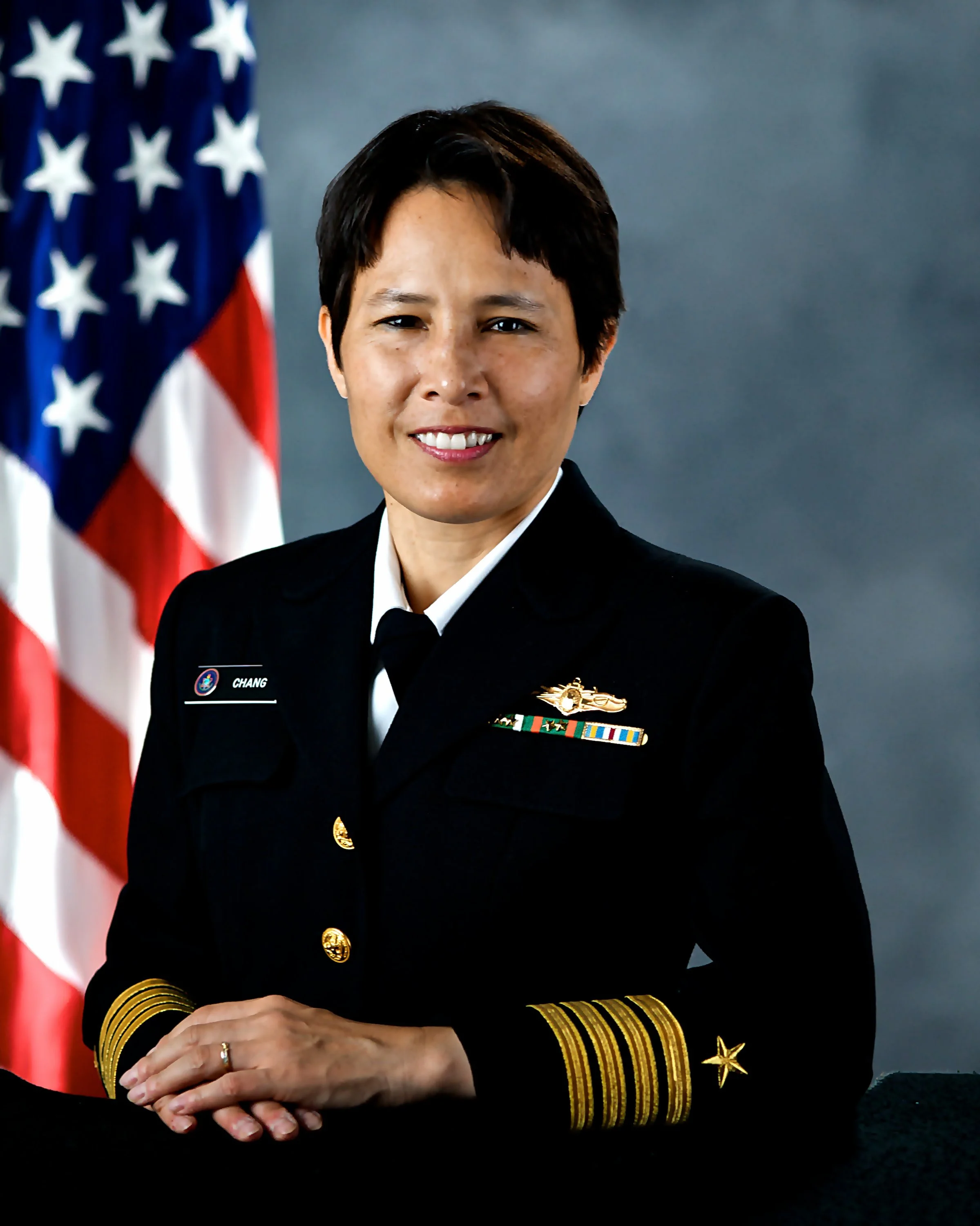
Ellen Chang is the founder of Syndicate 708, a deep tech investment firm established in 2019 that focuses on the space, digital, and autonomous systems industries. She is also Managing Director and Investment Partner at CapZone Investments investing in national security infrastructure. Chang’s career spans defense, aerospace, venture capital, and biotech. She built a strong foundation in aerospace and unmanned systems at Northrop Grumman, where she led key development initiatives and generated a $1.5 billion revenue pipeline. She is also a retired U.S. Navy Captain who served in naval intelligence until 2018. She also leverages private capital investment to benefit low-income communities and generate ESG + Resilient investing, and serves as a board member of Cypre Inc., a cancer immunotherapy company.
Chang holds a Bachelor of Arts in History from the University of Pennsylvania, an MBA in Finance and Marketing from The Wharton School, and a Master’s in Systems Engineering from the Naval Postgraduate School. This diverse educational background equips her with a unique, cross-disciplinary approach to both engineering and business management.
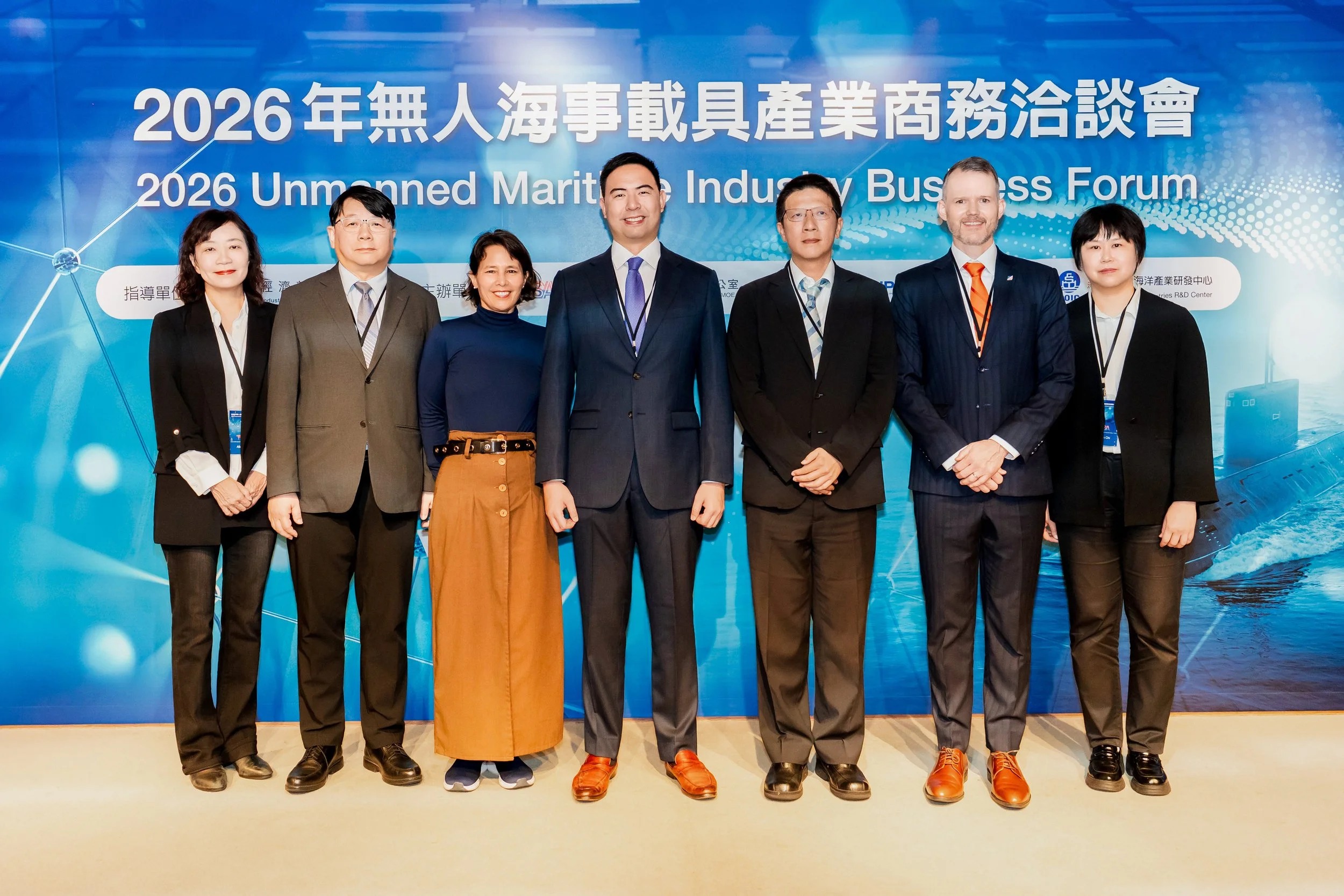
1. Your educational background is fascinatingly diverse—ranging from a History degree with a biophysics minor at UPenn to an MS in Systems Engineering and a Wharton MBA. How has this unique combination of humanities, hard science, and business shaped your approach to identifying and scaling 'deep tech' and autonomous manufacturing startups at Syndicate 708?
I actually began my undergraduate studies in biology, but reading James Michener’s “The Drifters” late in my junior year made me realize how much of the world I simply didn't understand. I made the difficult decision to pivot to History—specifically historiography, the study of how historical interpretations change. Shifting from the absolute answers of a science lab to the subjective nature of the humanities forced me to develop entirely new critical thinking skills. Having grown up in Asia, I was already exposed to diverse viewpoints, but historiography taught me how to actively examine my own biases and meld competing perspectives.
Today, that cross-disciplinary foundation dictates exactly how I evaluate deep tech startups at Syndicate 708. Rather than just looking at the technology, I start with problem framing: Whose world changes, and are we trapped in groupthink? From there, I map the strategic ecosystem to ensure a startup's suppliers and partners are actually healthy. Finally, I triangulate across disciplines. I look past the pitch to ask if the tech is feasible at scale, what the path to a defensible margin looks like, and how the technology will actually be industrialized. In fact, it is the lack of manufacturing scalability here in the U.S. that has led me to build strong supply chain relationships in places like Taiwan to help de-risk our investments.
Ultimately, I combine this humanist critical thinking with the hard engineering experiences I learned building massive, exquisite systems at Northrop Grumman. When I help a portfolio company, I am blending the wide-angle curiosity of a historian with the rigorous system design of an engineer to help them scale successfully.
2. From your perspective, what are the most critical challenges in the U.S. manufacturing and supply chain sectors today?
In my view, the most critical challenges in U.S. manufacturing boil down to a deficit in 'process know-how' and extreme supply chain fragility. First, we are facing a severe skilled labor shortage. Manufacturers are struggling to find and retain talent capable of operating advanced equipment and supporting automation. This is no longer the manufacturing of yesterday; it requires highly specialized, modern process knowledge that is currently in critically short supply.
Second, our supply chains—particularly in aerospace and defense—are unstable because they are often only 'one deep.' We rely heavily on single-point-of-failure suppliers who have barely survived from budget cycle to budget cycle. On top of that, there is a looming demographic decline: the founders of these niche companies average over 60 years old and are nearing retirement. At a time when we urgently need to scale the production of critical assets like munitions, this puts us at severe risk. While shifting geopolitics and trade policies are rightly pushing the industry toward reshoring and stockpiling, those transitions require significant time and capital—resources that these legacy suppliers simply do not have.
3. Given the current geopolitical tensions and the strategic competition with China, how urgent is the need for the U.S. to de-risk or decouple its deep tech supply chains from Asia?
The need to de-risk is incredibly urgent—frankly, it is work that needed to be done yesterday—but it is a process that cannot happen abruptly. The primary challenge right now is a lack of visibility. Most companies only understand their risk down to their tier-one suppliers, leaving deeper upstream dependencies dangerously opaque. Across almost every critical sector, from defense munitions to life-saving pharmaceuticals, we rely on a foundational layer of raw materials and components that are overwhelmingly controlled by China, often upwards of 75%. It would be an unacceptable risk for any single entity to hold that much market share, let alone a strategic competitor that would undoubtedly restrict those supplies during a crisis to protect its own interests.
We are seeing these hidden dependencies aggressively infiltrate the startup ecosystem. Because domestic components often come with crippling lead times of six months or more, defense tech startups naturally prototype using Chinese parts simply because they are low-cost and available today. The drone sector is a vivid example of this. Those foreign components then become permanently baked into the future products being developed for the Department of Defense. Even when we try to shift production domestically, many U.S. manufacturers simply lack the capacity to fulfill orders at a commercial scale—jumping from ten units to a hundred thousand units. Bridging that massive gap between prototype and scaled production is exactly where private capital must step in.
4. How do the lessons you learned in aerospace automation and systems engineering translate to the investments you make today in robotics and process automation companies?
My time at Northrop Grumman taught me that aerospace automation fundamentally rewards 'systems thinking'—an absolute discipline in reliability, traceability, and full-lifecycle design. When I evaluate robotics or process automation startups today, I specifically look for founders who possess that rigorous engineering experience, but who also have the creative vision to rethink product design from first principles.
Having worked across various domains and company sizes, I try to leverage those different perspectives to predict unforeseen risks and identify market inflection points. Right now, the urgency around 'reindustrialization' and supply chain disruption has created massive opportunities that simply didn't exist a few years ago. In these high-growth environments, I am hunting for companies that solve clear, costly industrial bottlenecks—whether that is in inspection, material handling, or chip-level packaging. I am constantly asking: 'Where is the most pressing challenge today, and where will it be tomorrow?'
Once we identify the right technology to solve that pain point, the focus shifts to defensibility. I want to know how a startup plans to build a lasting moat, whether through deep IP, owning an ecosystem, or negotiating exclusive supplier access to move faster than the competition. As an investor, my goal is to be a true value-add partner. I bring my engineering experience and network to the table to help founders navigate those strategic hurdles, because the value we provide must go far beyond just writing a check.
5. You’ve built a phenomenal career navigating several historically male-dominated sectors. What have been your personal principles when it comes to asserting your vision in these rooms, and what specific advice do you give to female leaders in today’s landscape?
Because I have spent my entire career in aerospace and defense, navigating male-dominated rooms has become my comfort zone, but it requires a very intentional mindset. Early on, I was inspired by a documentary about Tom Hanks, where he explained his acting philosophy: he always focused on helping his fellow actors. He knew that by anchoring his attention on serving the larger goal of the film, his own self-consciousness would disappear. I have applied that exact principle to my career. When you enter a room focusing entirely on how you can be helpful, collaborative, and advance the mission, you strip away your own insecurities.
However, to be truly helpful, you must be exceptionally prepared. My rule for myself—and the advice I constantly give my team—is to 'study a topic until you have an opinion.' Once you have formed a concrete, defensible perspective, you know you have researched it sufficiently to articulate your beliefs with absolute authority. Early in your career, that requires relentless preparation; today, I am fortunate to draw on decades of experience, but the principle of grounded confidence remains the same.
When I advise young female leaders, we inevitably discuss imposter syndrome. The reality is that men experience imposter syndrome, too—they are simply conditioned to push through it earlier in their careers. We’ve all heard the phrase 'fake it until you make it,' and men tend to leverage that permission much more readily than women do. My advice to women is to stop holding back. Do the research, form your opinion, and then grant yourself the exact same permission to step up, speak out, and own the room.
Learn more about Global Women Asia and subscribe to our newsletter.