Women in New Manufacturing Innovation Spotlight: Huey Chin (Enid) Tsai
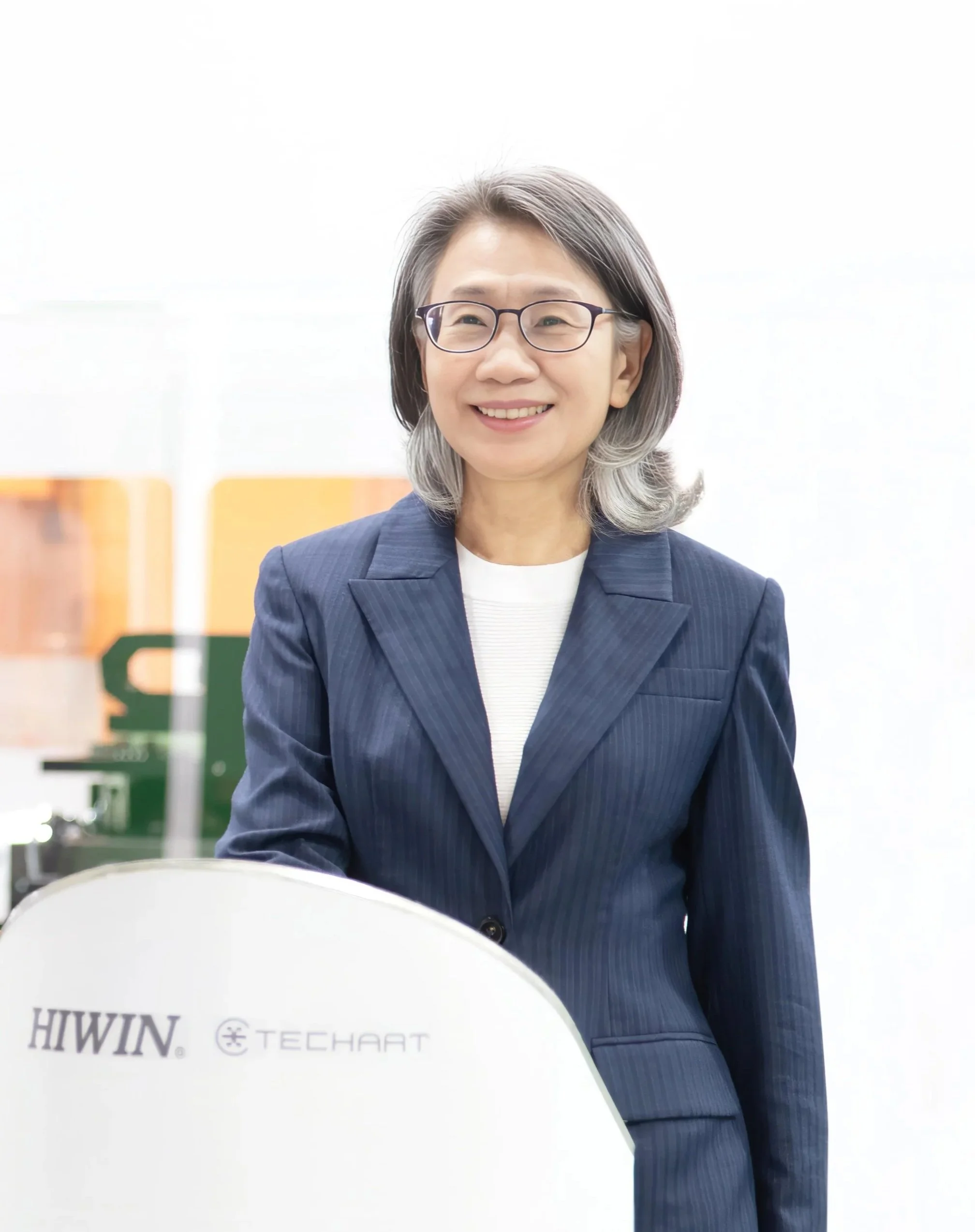
Huey Chin (Enid) Tsai currently serves as President and Chief Sustainability Officer of HIWIN Technologies Corp(HI-tech WINner), a world-leading manufacturer of motion control components known for high-precision, eco-friendly, and energy-saving products. Known for her creative mindset and coaching-based leadership, Enid has been a driving force behind HIWIN’s advancement in ESG practices, smart manufacturing, and brand value engineering. In 2012, Enid founded the ELIMI network, a shared-learning platform for female executives in Taiwan’s machinery industry. She is also a member of the Taiwan Women on Boards Association, where she actively promotes women’s participation in corporate governance, advocates for diversity and inclusive leadership, and empowers women leaders. In recognition of her leadership and impact, she was ranked No. 1 on Harvard Business Review Taiwan’s list of Best Performing Female CEOs of Publicly Listed Companies in both 2023 and 2025. A strong advocate for cross-sector collaboration, Enid actively connects industry with the arts, education, and government to foster innovation and social impact. Her works include the installation art Listening to the Blooming of Flowers for the Taichung World Flora Exposition, interdisciplinary performances that integrate HIWIN robotic arms with symphony orchestras, as well as documentaries and films that highlight the convergence of technology and humanity.
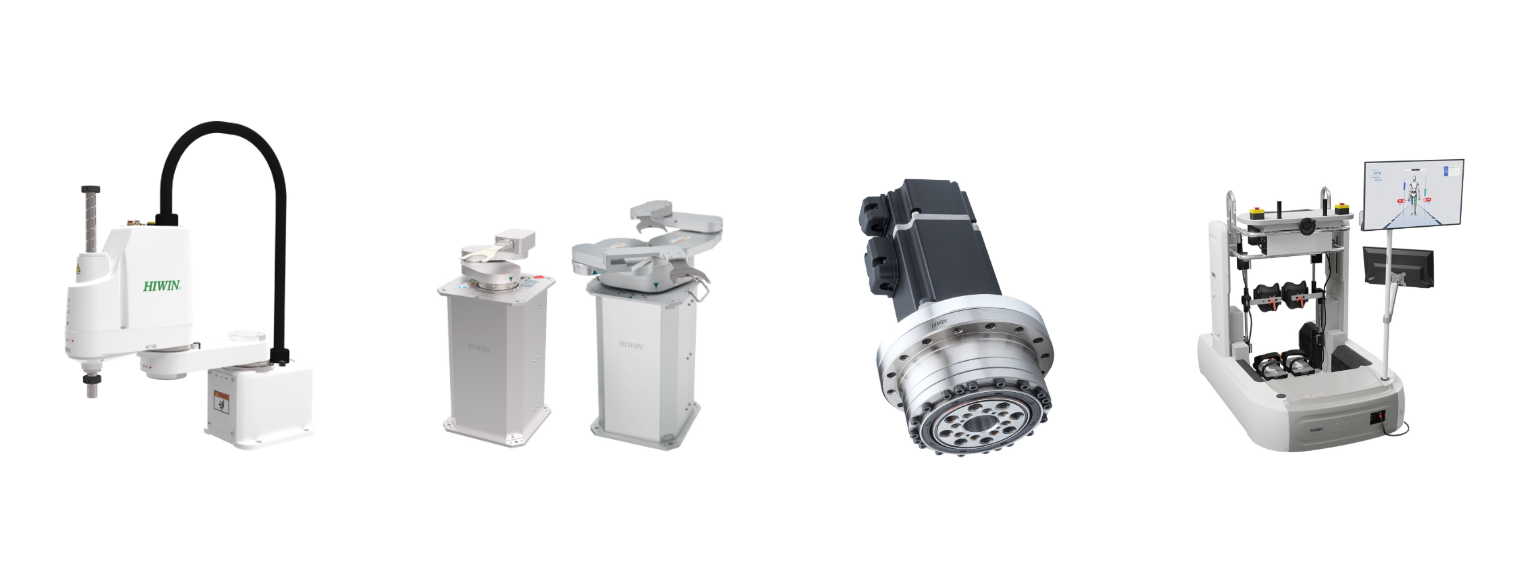
A few of HIWIN’s products.
1. Since assuming the role of CEO at HIWIN Technologies in 2008, you have steered the company through sustained growth amid the financial crisis, the pandemic, and global political and economic upheavals. What key decisions or convictions do you believe enabled HIWIN to expand from Taiwan to the world, becoming a globally influential brand with significant presence in Asia?
I strongly believe that in a globalized and highly competitive environment, every disruption carries both risk and opportunity. Opportunity, however, is reserved for those who are prepared. During the global financial crisis, while many organizations were cutting back, we chose a different path by increasing our investment in employee education and training. Therefore, when the market rebounded, our team was fully prepared to accelerate production and seize growth opportunities with confidence.
Similarly, we have never paused our commitment to research and innovation. As a result, during the pandemic, HIWIN was able to leverage our advanced product capabilities and service resilience to provide essential and timely support to the medical equipment industry. Supplying key components at a pivotal moment was more than a business response—it was our way of contributing to the protection and advancement of human life and health.
Given Taiwan’s geographic position and its unique and indispensable role in the global supply chain, we understand that we cannot stand apart from geopolitical and economic shifts. We see ourselves as global citizens. From food, clothing, housing, transportation, education, and recreation, to the full cycle of life, HIWIN plays a vital enabling role behind the scenes. Rooted in Taiwan, we serve the world.
2. HIWIN has deepened its expertise in industrial automation and smart manufacturing for many years. In light of the trends toward “New Manufacturing” innovation, the realignment of supply chains in Asia, and the global push for de-risking, how do you view the role of Taiwan and Asia within the global manufacturing landscape? What are HIWIN's key priorities for its next phase of international and regional (particularly Asian) expansion and technological upgrades?
As we enter a new era, I believe Taiwan and our partners across Asia are ready to take on a far more significant role in the global manufacturing landscape. This confidence comes from our work ethic, our continuously advancing technological capabilities, and the growing presence of outstanding women stepping into leadership across industries. I have witnessed how more and more women are bringing their expertise, resilience, and long-term perspective into sectors that were once predominantly male. I truly believe that the innate strength, empathy, and perseverance often associated with maternal leadership can translate into powerful societal value. When women rise, industries evolve—and when industries evolve, societies progress.
As for HIWIN, every stage of our strategic deployment is carefully aligned with the industrial characteristics and application needs of each country we serve. We provide components, sub-systems, full system solutions, and total solution services tailored to local and global demands. For example, in response to the accelerating wave of smart manufacturing and AI robotics, we deliver predictive-enabled transmission components such as ball screws, as well as industry-specific robots and critical key components. Our commitment goes beyond supplying products—we position ourselves as an indispensable supply chain partner in the global precision manufacturing and innovation ecosystem.
3. The machinery and manufacturing sectors have long been viewed as male-dominated industries, yet you have emerged as one of the most prominent female CEOs. In your journey from Taiwan to Asian and global markets, what gender and cultural stereotypes do you feel you have shattered? For young women aspiring to advance in Asia's manufacturing and technology industries, what specific advice would you most like to offer?
As we expanded into Asia and the global market, I was incredibly fortunate to meet a true mentor, Mr. Chuo Yung-Tsai, the founder of HIWIN Technologies. He saw something in me before I fully saw it in myself. In an industry traditionally dominated by engineers — what many might call a “technical boys’ club” — he gave me the space and trust to fully express my imagination and creativity.
What mattered even more, however, was my willingness to step forward with courage and to ask questions without fear. I was never constrained by the burden of “professional ego” or rigid disciplinary boundaries. Because I did not limit myself to what I was supposed to know, I was able to learn freely across fields. Ironically, it was this lack of self-imposed limitation that enabled me to create meaningful cross-disciplinary impact and to help build lasting brand value.
My advice to young women is to start by understanding and assessing your own strengths — not just your skills, but also your personal qualities, professional expertise, and leadership capabilities. After a careful self-assessment, choose a role where you can both advance yourself and create meaningful value for others. On the journey to realizing your dreams, never forget this: let your life shine brightly. Illuminate your own path, and in doing so, light the way for others as well.
4. In light of new opportunities presented by AI, smart manufacturing, and green transformation, what key competencies and global perspectives do you believe future manufacturing and technology leaders in Asia must possess? How does HIWIN specifically support the development of female and young talent through industry-academia collaboration and talent cultivation initiatives?
As AI becomes increasingly embedded in everyday operations, and as smart manufacturing and green transformation accelerate across industries, I believe leaders in manufacturing and technology must develop strong systems thinking. Only then can we truly integrate resources, align strategy with execution, and build the capability to operate with a “global view, local touch”.
At HIWIN, our long-standing commitment to industry–academia collaboration and talent development—especially for women and young professionals—stems from the foresight and wisdom of our founder, Yung-Tsai Chuo. He has often said, “If women represent half of the population, why wouldn’t we fully leverage that talent?” This belief has profoundly shaped our culture. In Taiwan’s manufacturing sector—particularly in the machinery industry—HIWIN has a relatively high proportion of women in leadership roles. We continue to intentionally cultivate the next generation of female talent by assigning them to strategic projects and cross-functional missions. I see it as my responsibility to empower them through real-world challenges, so they grow into a strong and confident force of women in technology.
As for the younger generation more broadly, we recognize that both corporate sustainability and social responsibility require the vitality of diverse generations. Talent development cannot be accidental—it must be intentional. We have established structured training and succession planning mechanisms to build a sustainable leadership pipeline and ensure the long-term continuity of our organization.
5. You are often described as possessing a leadership style that combines “resilience and warmth.” As a female Asian leader managing multinational teams and multi-location operations, how do you balance rigorous performance expectations with caring for employees and respecting local cultures? During your most stressful moments, what strength keeps you moving forward?
Delivering performance is a core responsibility of any executive. However, within an intensely demanding schedule, I believe what truly differentiates sustainable leadership is our ability to build a culture of care. When we intentionally create a supportive and protective environment, it becomes a foundation that enables them to commit wholeheartedly to their work, which results in a direct and meaningful impact on both retention and overall performance. Therefore, at HIWIN, we embedded “delivering care” as part of our responsibility across departments. Culture does not form by accident—it must be shaped deliberately. I see it as my role to continually nurture and reinforce this mindset across the organization.
As a global company, HIWIN’s effectiveness depends on seamless collaboration between our subsidiaries around the world and our headquarters in Taiwan. Efficiency and value creation for our customers require more than operational alignment—they require cultural understanding. That is why we place strong emphasis on cultural intelligence. For the past years, I have personally led workshops for our senior executives and key talents from across regions. These sessions are not only strategically meaningful but also engaging and energizing. More importantly, they strengthen empathy, broaden perspectives, and deepen mutual trust—qualities that are essential for global leadership.
When I face moments of greatest pressure, what sustains me is the belief that I want my life to be meaningful. As a senior corporate leader, the most direct way for me to give meaning to my journey is to lead an exceptional team toward a shared vision—while caring for our employees and their families, and creating value for humanity through innovation and service. That, to me, is the true purpose of leadership.
Learn more about Global Women Asia and subscribe to our newsletter.