Women in New Manufacturing Innovation Spotlight: Nana Tseng
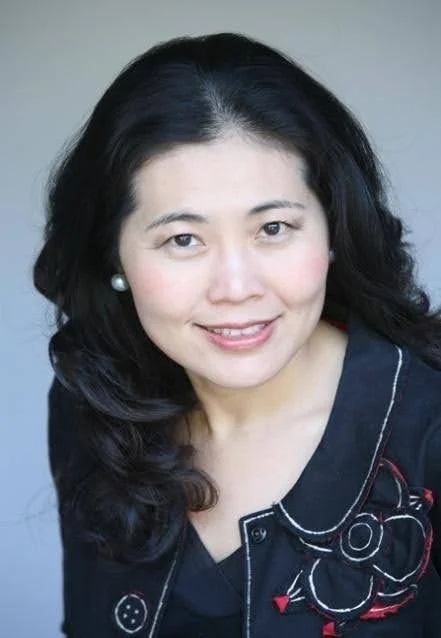
Nana Tseng is Chief Procurement Officer and Vice President of External Manufacturing at onsemi, a semiconductor manufacturer specializing in intelligent power and sensing technologies for the automotive, industrial, and other end markets. There, she leads global procurement and sourcing strategy and oversees multibillion-dollar spend across capital equipment, direct and indirect materials, and external manufacturing operations and services. A four-time Top 100 Woman in Procurement and recognized as a Top 10 Chief Procurement Officer in Manufacturing, she is known for building partnerships that strengthen supply resilience, accelerate innovation, and improve cost competitiveness.
Previously, Nana served as Vice President of Sales at Advanced Semiconductor Engineering, the world’s largest independent provider of assembly and test services, partnering with fabless companies, IDMs, OEMs, and EMS providers worldwide. Born in Taiwan and raised in Saudi Arabia, she was educated in the U.S., worked extensively across Southeast Asia, and is now based in Silicon Valley. Nana holds an MBA from MIT Sloan and a bachelor’s degree from UC Berkeley, and serves on boards and advisory groups including Monte Jade West Science and Technology Association and Oceanside Perspectives.
1. You have navigated incredibly diverse cultural landscapes throughout your life and career. How has navigating such diverse environments from a young age shaped your approach to managing a multibillion-dollar global supply chain, and why is multicultural fluency so critical for leaders in today’s manufacturing landscape?
My multicultural background has been a meaningful advantage in leading global supply chains because it gave me an early appreciation for how culture shapes perspectives, communication, decision-making, and trust. While core human values are universal, the way you build alignment and move forward is often highly context-specific. Being able to recognize those nuances and adapt accordingly is essential to driving results across regions.
In global supply chain leadership, that plays out every day. You are constantly navigating different cultures, operating models, business norms, and regional constraints, and what works well in one market may not translate as easily to another. Growing up across diverse environments taught me to listen closely, read situations with cultural sensitivity, and adapt my approach in ways that build trust and create progress. In today’s manufacturing landscape, multicultural fluency is more than a leadership strength—it is a business imperative. It helps create stronger partnerships, faster problem-solving, and more resilient decision-making across an increasingly complex global ecosystem.
2. You’ve observed that the semiconductor industry can never return to its pre-pandemic state—the era of highly predictable, cost-centric supply chains strictly segmented across Taiwan and China is over. In light of this shift toward 'New Manufacturing' and the global push for de-risking, how do you view the evolving role of Taiwan and the broader Asian market? What new strategies are essential for maintaining resilience across these increasingly complex global partnerships?
Before COVID, the semiconductor industry spent decades building a highly efficient, cost-driven global supply chain. During the pandemic, many assumed the disruption caused by shortages, geopolitics, and conflict would be temporary. It is now clear that the industry has undergone a structural shift, and regionalization is the new reality.
Asia, and Taiwan in particular, remains central to the semiconductor industry, with the majority of global manufacturing capacity concentrated in the region. At the same time, regionalization is driving greater diversification into Southeast Asia as customers seek more resilient and risk-balanced supply networks. Taiwan’s leadership in foundry, assembly & test, anchored by companies such as TSMC and ASE, gives it a strong position to extend its ecosystem globally. TSMC is a prime example of how it responds to dynamic market needs by expanding its footprint to US, Europe and Japan with its key customers and partners.
Taiwan’s world-class manufacturing infrastructure, disciplined operating model, integrated supply base, and deep talent pool provide a strong foundation for growth in this new manufacturing era. Going forward, resilience will depend on the speed and agility with which companies build regional partnerships, expand trusted ecosystems, and adapt to an increasingly complex landscape of global co-opetition.
3. You’ve emphasized that surviving supply chain shocks comes down to three pillars: information, experience, and relationships. How can future leaders cultivate these pillars, and where can they find the most support to help them on this learning journey?
Leading through supply chain shocks comes down to three things: real-time market intelligence, sound business judgment, and trusted relationships. Market intelligence is essential, but much of what matters most—how suppliers are allocating capacity, where constraints are building, and how partners are prioritizing demand—is rarely visible in public data. That insight comes from deep knowledge of the supply base and strong relationships built over time. When disruption hits, leaders need both the judgment to make sound decisions and the credibility to secure transparency, alignment, and support. Future leaders build these capabilities and credibility through operational exposure, cross-functional experience, and long-term investment in trusted relationships. More often than not, the solution is only a phone call away.
4. The semiconductor and heavy manufacturing sectors have traditionally been overwhelmingly male-dominated, and the Asian immigrant experience in corporate America comes with its own unique set of cultural navigations. What unique strengths do Asian female leaders bring to the table in these complex, highly technical industries, and how can the tech industry better support their path to executive leadership?
Asian female leaders often bring resilience, grit and attention to details shaped by navigating both technical complexity and cultural nuance. For many, the immigrant experience also builds adaptability, humility, and determination—qualities that are especially valuable in manufacturing environments where long-term thinking, disciplined execution, and continuous improvement matter deeply. In my experience, these strengths often translate into leadership that is steady, grounded, and highly effective in driving lasting operational excellence.
5. You made a very bold and successful career transition—moving from a VP of Sales role at ASE to becoming the Chief Procurement Officer at Onsemi. For many female leaders, taking a leap into a completely different function or sector comes with a lot of uncertainty. How did your previous experiences give you the confidence to navigate this pivot, and what advice do you have for women who are hesitant to embrace major career changes?
I don’t have a preset image of what my career should look like or where it should end. It may seem a bit counterintuitive, but much of it has been driven by curiosity and by opportunities to take on meaningful challenges, push my limits, and discover what I am capable of along the way. This pivot from Sales to Procurement is certainly one of the most significant and meaningful transitions I have made, especially at a later stage in my career. At the time, I was simply driven by a desire to understand what happens after a sales order comes in and what it takes to run an operation that delivers with the cost, quality, and performance required to compete in a highly demanding market. While it took a great deal of courage to reinvent myself, the payoff has been tremendous—not only in shaping my career trajectory, but also in building my confidence. I would advise any woman who is hesitant to embrace major change to believe in herself and have the courage to make the leap—once you step out of your comfort zone, you begin to see a whole new world.
Learn more about Global Women Asia and subscribe to our newsletter.