Women in New Manufacturing Innovation Spotlight: Anne Patricia Sutanto

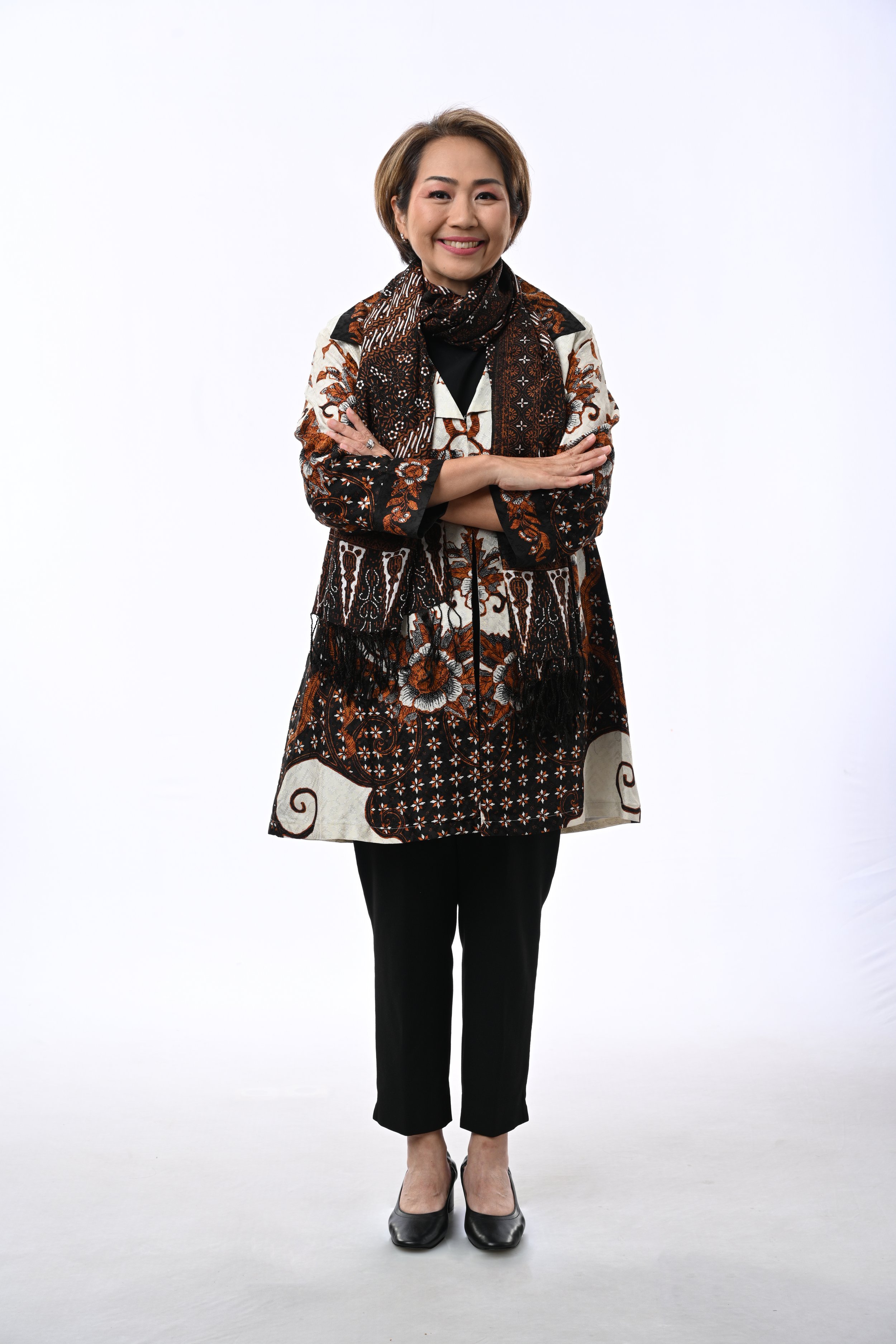
Born into an established business family in the integrated wood industry in Indonesia, Anne Patricia Sutanto pivoted to the garment sector during a critical period of economic vulnerability in Southeast Asia. Stepping in to join PT Pan Brothers Tbk during the 1997 financial crisis, she played an important role in transforming the ailing company into Indonesia's largest garment manufacturer. Today, as Vice CEO, she oversees the production of apparel for well-known international brands and manages a massive industrial workforce of approximately 25,000 employees across Java Island, Indonesia.
Beyond her corporate leadership, she is a central advocate for the region’s manufacturing supply chains and international trade policy. As a leading female executive in a traditionally male-dominated sector, she leverages her platform to shape Southeast Asia's industrial future. She serves as Chairwoman of the Indonesia Garment and Textile Association (AGTI), Trade Chair of the Indonesian Employers Association (APINDO), and as a Board Member of the International Apparel Federation (IAF). She holds an MBA from Loyola Marymount University and a Bachelor’s degree in Constitutional Law from the University of Indonesia.
1. The global garment industry is undergoing a massive technological evolution. Under your leadership, Pan Brothers is scaling Industry 4.0 capabilities, automation, and fully traceable, circular production for the world’s top technical brands. As 'New Manufacturing' technologies collide with the urgent global demand for sustainability, how do you balance the push for high-tech automation with the human craftsmanship that is at the center of your company?
At Pan Brothers, we do not see technology and human craftsmanship as opposing forces. We believe the future of manufacturing lies in combining advanced technology with the strength, creativity, and adaptability of people. Fashion and garment manufacturing will always remain a people-driven industry because behind every product there is human dedication, precision, and innovation.
Industry 4.0, automation, and digital traceability are transforming the way we operate. These technologies allow us to improve efficiency, strengthen quality consistency, reduce waste, optimize energy consumption, and provide greater transparency throughout the supply chain. Global brands today demand not only speed and scale, but also accountability and sustainability, and technology helps us meet those expectations more effectively.
However, technology alone does not create excellence. Human craftsmanship remains irreplaceable, especially in technical garments and value-added products where experience, attention to detail, and problem-solving capabilities are critical. Machines can improve processes, but innovation, collaboration, and trust are still built by people.
For me, the true purpose of technology is to elevate human potential. That is why our transformation is not only about investing in machines and systems, but also about continuously investing in our people through training, upskilling, and leadership development. Sustainability must include both environmental progress and human progress.
2. With the rapid integration of advanced technologies into traditional supply chains, how is high-tech—and specifically AI—transforming the garment industry today, and what major shifts should we be watching for over the next few years?
AI and advanced technologies are fundamentally reshaping the future of the garment industry. What was traditionally viewed as a labor-intensive industry is now evolving into a highly connected, intelligent, and data-driven ecosystem. This transformation is happening across every stage of the supply chain from forecasting and sourcing to production planning, quality control, logistics, and sustainability reporting.
Today, AI helps manufacturers become more agile, responsive, and efficient. It improves demand forecasting, reduces overproduction, enhances quality consistency, and enables better visibility across global supply chains. In an industry where speed, precision, and sustainability are increasingly interconnected, AI is becoming a critical strategic tool rather than just an operational tool.
However, I believe the future conversation about AI should not focus only on efficiency, but also on responsibility. As manufacturers adopt AI and digital technologies, we must ensure that innovation goes hand in hand with sustainability, ethics, workforce development, and inclusivity. Technology should create a positive impact not only for businesses, but also for people and the environment.
Over the next few years, I believe the biggest shifts will be in traceability, transparency, and sustainable manufacturing. Global brands and consumers increasingly want to know where products come from, how they are made, and whether they are produced responsibly. Manufacturers that can combine digital innovation, sustainability leadership, and operational excellence will become the strongest long-term partners in the global supply chain.
3. With Western brands increasingly looking to 'de-risk' and realign their supply chains to avoid overreliance on a single market for production, Southeast Asia is playing a more critical role than ever. In this shifting landscape, what key strategies must Asian manufacturers adopt to become indispensable, high-value partners rather than just high-volume producers?
The global supply chain is experiencing one of the biggest transformations in decades. Today, brands are not only searching for manufacturing capacity, they are looking for trusted partners that can provide resilience, agility, sustainability, innovation, and long-term reliability. This creates a significant opportunity for Southeast Asia, including Indonesia, to play a much larger role in the future of global manufacturing.
To become indispensable partners, Asian manufacturers must move beyond competing solely on labor cost and production volume. We must position ourselves as strategic partners capable of delivering innovation, compliance, sustainability, transparency, and speed. Global customers increasingly expect manufacturers to participate actively in product development, ESG implementation, supply chain accountability, and risk management.
In today’s environment, competitiveness is no longer defined only by price. It is defined by trust, adaptability, consistency, and the ability to create long-term value together with customers. Manufacturers that invest in technology, people, sustainability, and operational excellence will be the ones that remain relevant and competitive in the future.
I also believe that strong collaboration among governments, industries, and global stakeholders are essential to creating a healthy and sustainable manufacturing ecosystem. Legal certainty, infrastructure, workforce readiness, and sustainability policies all play an important role in strengthening Indonesia’s competitiveness as a strategic manufacturing hub.
4. Based on your experience, what unique strengths do female leaders bring to heavy manufacturing, and what is the most important piece of advice you would give to a young woman on your factory floor who dreams of reaching the executive level?
Manufacturing has traditionally been perceived as a male-dominated industry, but I believe leadership is not determined by gender. Leadership is determined by integrity, competence, resilience, consistency, and the ability to inspire people and create impact.
At the same time, I believe women bring unique strengths into leadership. Women often lead with empathy, collaboration, adaptability, and strong attention to detail, while still being able to make strategic decisions under pressure. In industries like manufacturing, where success depends not only on systems and productivity but also on people, these qualities are increasingly valuable.
Throughout my career, I have learned that diversity in leadership creates stronger organizations. Different perspectives lead to better innovation, better problem-solving, and better decision-making. Women should never feel limited by stereotypes about what industries they can or cannot lead.
To every young woman on the factory floor who dreams of becoming a leader one day, my message is simple: never underestimate yourself. Continue learning, work with discipline, embrace challenges, and do not be afraid to take responsibility. Growth often comes from difficult experiences and continuous perseverance. Most importantly, stay authentic, maintain your integrity, and believe that your contribution matters.
5. Beyond your incredible success as a corporate executive, you are an inspiring public role model in Indonesia. As both a cancer survivor and an avid marathon runner, how have these personal tests of endurance and strength shaped your approach to leadership?
My journey as a cancer survivor and marathon runner has deeply shaped the way I lead, both personally and professionally. Those experiences strengthened my perspective on resilience, discipline, gratitude, and the importance of maintaining a positive mindset in every stage of life.
Going through cancer treatment became a powerful reminder for me about the value of health, time, family, and purpose. It taught me to appreciate life more deeply, to stay mentally strong, and to continue moving forward with optimism and courage. Rather than slowing me down, the experience gave me even greater motivation to live meaningfully, contribute more, and inspire others to never give up.
Marathon running reinforces many of the same values. A marathon is not about speed alone—it is about consistency, preparation, endurance, and determination. Leadership is very similar. Building a company, leading people, and navigating global challenges require patience, focus, and the ability to keep moving forward step by step.
These experiences have made me more empathetic, more resilient, and more aware that strong leadership is not only about business performance, but also about creating hope, encouragement, and positive energy for others. I believe every experience in life can become a source of strength when we face it with gratitude, purpose, and perseverance.
Learn more about Global Women Asia and subscribe to our newsletter.